
That is the purpose of these emails, help you be a better architect.
In our free Enterprise Architect's Kickstart I'll tell you some of your job is predictable. While other parts are unpredictable. All of our work is constrained by time. You always have exactly the amount of time between the start of the architecture project and the day your organization must complete the change. The hard truth is those implementers are going to need sprints, months, quarters, or years after the stakeholder decides to act.
Our work is before that decision. We need to always have done enough architecture to understand the problem, analyze the real choices, and develop a recommendation for our stakeholders.
Well this week, I have a great time-sensitive story that lets us step inside method and the root of all enterprise agility-a timely resolute decision. Let's explore the tools and method of best-practice EA compressed into days. Let's architect the Glasswing Shock.
We'll start the journey in the TOGAF ADM Phase H. Just because the radar lit-up doesn't mean we toss out best-practice architecture. We simply recognize our stakeholders have less time to make a decision, and less time to act.
Solid EA teams are always creating the information that comes out of Phase H—new capabilities our organization might want that comes from changes in what is available, and ecosystem shifts that invalidate our current enterprise context.
Bang. We just got both. Anthropic announced that Claude Mythos is so powerful writing at code it can string together undocumented APIs, and features into functioning code that threads the needle of weird edge cases and special handling just like a parkour master.
Parkour wizards will flip, climb, swing, and vault off whatever they find. Claude Mythos will read the code, finding unintended APIs, and stringing them together into viable exploit paths that humans normally dismiss as impractical. At machine speed, with zero moral judgement about whether anyone intended swinging around the air vent and vaulting the lamp-post. If someone put it there, Mythos will use it.
Anthropic saw their tool build functional exploits by stringing together parkour-style approaches. They gathered the custodians of the more than 30 years of latent vulnerabilities baked into our IT stacks.
In a short while we will start receiving a tsunami of patches. Each providing every AI-enabled badnick developer a roadmap into our IT environment.
We just got a tsunami warning. We need to do architecture work right now before the wave hits.
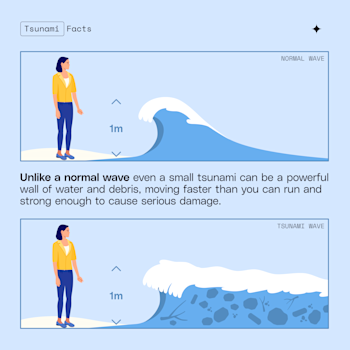
Don't expect the Hollywood Crashing Wave
Real Tsunamis implacably roll in — sustained volume and debris long after the first warning.
The Panic and The Real Problem
Your organization is going to panic. The entire Information Security industry is in a froth about zero-day and micro-segmentation and zero-trust.
I'll bet they are all so busy running around, and assuming their EA team is slow moving, that no one has even asked for help.
Tsunami alerts are a good example of this pattern. They’re issued early—not to provoke panic, but to give you time to act. Where I live in Victoria, BC, I’ve seen three such alerts this year, each with 8–12 hours’ notice. So, if no-one has asked, get in gear. We don't have much time, and you don't have to wait. There are several points in the TOGAF ADM where the formal method supports a self-drafted request for architecture work. I enjoy the pragmatism at the core of the TOGAF.
We immediately hit the first critical challenge from our methodology—what is the problem we are architecting. Phase A of the ADM distinguished the 'ask' (Request for Architecture Work) from the real architectural problem (Statement of Architectural Work).
Let's spend a minute and develop the knowledge Phase A produces.
We start by crisply stating reality.
Glasswing is a clean-room. The bad guys don't actually have the zero-day roadmap. AI-enabled code tools are good, but they still need a lot of time to cruise through the universe's source code. Especially if the cruising needs to be hidden from the LLM-vendor's sysadmin by running local. We can assume the mainstream bad guys are waiting for the patch.
A primary vendor—the one who makes the core libraries and systems every one uses—releases a patch, the starting gun fires. AI-enabled development collapses the time between a patch release and a weaponized exploit. Especially when we have a many patches providing a parkour route to the juicy vulnerability.
We can expect vague "security updates" rather than CVEs. At least the laziest badnicks won't have paved roadmap. However, we can expect we will be flying blind. We won't be able to assess risk or prioritize.
Then we have the secondary vendors. Those not inside the Glasswing tent, who use the primary vendor's products to build their products. Commercial vendors, platform vendors, library providers, and the really scary vendors—those who provide IT-operation systems. Our secondary vendors start at the same time as the badnicks.
At least some of our vendors are not going to be able, or willing, to backport. We will face notices that net down to the old version is hopelessly compromised, you need to perform a breaking update.
So we will face cascading patches across our stack. Remember Log4J? Everyone had a Log4J update. Let's image 10 simultaneous Log4Js. Or 100.
We face synchronized exposure, guaranteed lateness, and cascading cross-stack patching. Even if we could out-patch a machine-speed adversary in a bespoke legacy environment the first problem is we will have latent vulnerabilities as the patches cascade through the stack. Our critical problem is not how to patch faster. The problem is surviving a guaranteed lag.
This is not a vulnerability management problem anymore — it is an architecture problem defined by time, lag, and survival under asymmetric speed.
No False Fixes
We have to provide guidance on surviving weaponized guaranteed lag.
Phase B, Phase C, and Phase D all start with the same step—figure out what architecture models and reference models will help you make sense of the problem and find a path out.
I'll be frank, my first morning's white board was filled with the standard security architecture materials. I had NIST, MITRE ATT&CK, OWASP10. I had scribbles and notes.
Then I looked hard at surviving weaponized lag. I gave my head a shake. In every Stakeholder Engagement Workshop I challenge our customer with 'who said that was the priority'?
I got caught up in the hype. I assumed because I could see a tsunami that we all needed to panic. I projected a set of assumptions, priorities, and preferences.
So I pulled out my SABSA materials and looked at risk. Specifically, we went to risk appetite and Key Risk Indicators. We needed to move past the core mistake of most risk analysis ground ourselves in the stakeholder's risk appetite and look at KRIs. KRIs are forward-looking. The point to where we will be, and advise us to take necessary action to stay within risk appetite.
Not get safe. Get to within risk appetite.
It's a subtle point, but these subtle points are where established best-practice frameworks like SABSA, and DAMA, and TOGAF deliver best practice.
We accept a lot of risk to do business. We sell to customers on credit. We hire people we've never met. We champion projects. Every day I ride my bike through a high traffic tourist zone.
Being Safer
How can we tell if we are safer? Reading Verizon's DBIR, Mandiant, and Microsoft Digital Defense Report 2025 took us down three tests for safer. We concluded safety is pragmatically improved by:
- Reducing unauthorized access
Bad actors get in through compromised credential and misconfiguration - Reducing unauthorized dwell-time
Undiscovered access and unauthorized authority creates latent, compounding risk - Reducing potential impact 'blast radius' of unauthorized access
Additional access (lateral move) usually provided by finding more access while dwelling.
Access and dwell were the compounding factors. Lateral movement seems particularly sensitive to compromised credentials in IT operations systems.
Our Risk Appetite
So here we are. The first report I read said zero trust! It's time to get serious about micro-segmentation. Seriously. We have a tsunami signal. We have no idea the size of the surge, or when it will arrive. The advice is to follow a path that in a decade of effort we have made no meaningful progress.
In any Subject Matter Expert diatribe there are the roots of a good idea. But we need to square that good idea with reality.
First, our web-apps. You know the gazillion Port 443/HTTPS connections that are designed to let random strangers send commands to our business software. Or the scarier internal ones where our staff connect their laptop and hit internal web-apps that have an implied identity. Yeah identity implied because the company laptop is being used. You know that laptop, the one that spent the week cruising WiFi hotspots and random webapps. Look at a Zscalar or phishing reports, those laptops are making eyes at a lot of strangers. Yet, they are the basis of corporate identity.
Second, legacy-land. The 30-year-old bespoke legacy environments that are high entropy. It's like telling our security folk to find the badnicks by watching the CCTV of Tokyo Station. Remember 5,000 people will randomly bump into someone for every pickpocket pass.
Now, let's face the hard fact—what I just described is within our risk tolerance. Maybe, it's Yellow, in SABSA's KRI terms. Probably, this is Green!
SABSA Math & Stakeholder Decision
For the last decade, most enterprises have compromised and lived in Orange for security and resiliency. Legacy-land makes money. Fixes break these fragile revenue agents. Proposed fixes actually don't move us to Green. Instead, they drive our resiliency risk appetite to Red. No one chooses Red. No one.
So my first question is: Did the Glasswing shock just violently shoved our security posture squarely into the Red? Are we outside our Risk Appetite? My SABSA training is clear. The rule is absolute: you cannot consciously choose to stay in the Red. You must drop everything and run straight to Green.
You are outside your appetite for risk. I may ride my bike through Victoria's tourist zone and down a main road with a painted bike lane. I don't do it during peak travel time. During peak travel time someone inadvertently attempts to kill me every day. I take advantage of living in Pacific Time and working on Eastern. Riding home at 2:30 (5:30 Eastern) there is only an attempt on my life once a week. And that is within my risk appetite.
At this point, analysis stops adding value — only a bounded recommendation inside risk appetite does.
So what gets us to Green?
We recommended three actions:
- put an auto-updated WAF on every web-interface into legacy-land
Commercial WAF vendors are in the clean-room. We expect they will coordinate zero-minute updates. - put every business partner facing API through an API gateway
- put a canary inside every perimeter—a system with no possible legitimate use that will incontrovertibly tell us something bad is looking for access by simply looking for access. Even if they are using a compromised admin credential, or implied laptop identity hitting a canary is incontrovertible—a badnick is attempting to parkour through legacy-land.
We asked two hard questions:
- is it ok if legacy-land apps break when known illegitimate signatures are used for normal transaction and the auto-updated WAF blocks it?
- will you authorize immediate suspension of network authority for any system that knocks on a canary's door? Our worst case is a lurking badnick switching from quiet snoop to destructo-man when the badnick thinks it is spotted.
There you are back in Green. Quietly commuting to work on our bike and accepting one attempt on my life a week.
Once we are back in Green we can look at other things to raise improve our security posture and application resiliency. After all, we want those fragile legacy revenue agents pumping cash into the company. We have real business problems—tariffs, competition, consumer confidence—and need the money. There are pending changes that will improve our competitive and cost position, and incrementally improve security and resiliency.
Conclusion of Architecting the Glasswing Shock
In TOGAF terms we just jumped from architect this to a recommended target. Just like Claude Mythos we have no moral judgement. You tell me your enterprise context, objectives, performance expectations, constraints, and risk appetite and I will craft your best target. That is best practice EA—our stakeholders own the upside and the downside. As an enterprise architect I give awesome advice. I'll tell them uncomfortable truths. When they decide I'll own their decision like it was mine. After all, their decision is the organization's authoritative decision made by an authorized decision maker.
I hope you enjoyed the journey. My team walked through this in a couple of days. Along the way we kept having to pull back to judgement free. Yes, I ended-up working late one day and rode during peak traffic. I have the bike-dash-cam footage of the resulting attempts on my life. Seriously, cutting into the bike lane is dangerous!
So here is your challenge. I know you want to be the best enterprise architect at your company. I know you want to have the cool company changing stories I tell. Frankly, they are laying there waiting for you to follow the best-practice of our profession. Step-up, do the work. Tell your stakeholders the truth. I know it takes acts of personal bravery.
When you do the math you leave the monomaniacal subject-matter-experts and Cassandras outside the leader's office. Cassandras pointing at the dumpster-fire work for free on the internet. Your job is to do the math and make a recommendation that gets your company in a better position. Might be back to green. Might be breaking into a new market.
Trust me. They are waiting for good advice.
To close, let's look ahead. If Claude Mythos is that good at reading the code and crafting systems that work—parkouring through unintended APIs and writing functional code with zero moral judgement... damn, I want some of that! I want that AI-worker on my side. I'd love to give it a couple more constraints and have it demonstrate security, resiliency, and modularity. I want a modern, high-velocity, auto-tested CI/CD pipeline. AI-enabled development is changing the testing and resiliency game forever. My next generation of digital products will be re-born secure.
Do the math. Guide the change.
Have a great day!
Regards,
Dave
Dave Hornford
Conexiam
PS: If you are in a hurry, have a look at our Architecture Governance Workshop or let's talk about standing up a dynamic roadmap. Getting to containment doesn't have to take a long time.

Agentic AI Playbook Conversations
Agentic AI Playbook Conversations We have been been deeply immersed in the evolving landscape of AI Adoption, engaging in a journey encompassing both technical intricacies and broader digital transformation. We developed the Business Leader’s Guide […]

Download AI Adoption Critical Capability Reference Architecture
Download AI Adoption Critical Capability Reference Architecture AI Adoption requires innovation thinking. Today we do not have proven best-practices for widespread AI Adoption that consistently improve our organizations. We require the ability to re-imagine our […]
Download Business Leader’s Guide to AI
Download Business Leader’s Guide to Artificial Intelligence Organizations that successfully apply innovative technology have had a competitive advantage. Innovative technology does not come with established success patterns and best practices. Innovative technology is novel and […]

Download the Introduction to the TOGAF Standard, 10th Edition
Download Introduction to the TOGAF® Standard, 10th Edition The TOGAF Standard, 10th Edition makes adoption of enterprise architecture best practices easier. It separates the universal concepts from proven best practice. The standard underscore where to […]

Download Capability-based Planning Guide
Download Capability-based Planning Guide Always drive to realize value. Half an improvement is 100% waste! No one teaches an Eagle to crawl, walk, or run. Eagles Fly! Download Teach your Eagles to Fly: Capability-based Planning […]

Download Business Architecture Capability Assessment Guide
Download Business Architecture Capability Assessment Guide Download a Business Architecture Capability Assessment Guide. Capability-based planning is one of the most powerful business architecture improvement techniques. Best practice of capability-based planning uses capability as a management […]

Download Sample Enterprise Architecture Principles
Download Sample Architecture Principles Download a sample enterprise architecture principles. Enterprise Architecture principles identify how to approach a problem or decision. The approach always drives you towards your enduring priorities. Download Sample Enterprise Architecture Principles […]

Download Enterprise Architecture Governance Guide
Download Enterprise Architecture Governance Guide Download the Enterprise Architecture Governance Guide to understand best practice to direct and control the development of architecture, and change to obtain the expected outcomes. Download Enterprise Architecture Governance Guide […]

Download TOGAF and SABSA Integration
Download TOGAF and SABSA Integration Bring SABSA, the world’s best security architecture framework, and TOGAF, the industry standard enterprise architecture framework together. Download TOGAF and SABSA Integration TOGAF and SABSA Integration Includes SABSA uses a […]

Download Enterprise Architecture Capability Reference Architecture
Download Enterprise Architecture Capability Reference Architecture The Enterprise Architecture Capability Reference Architecture will speed up establishing and enhancing your EA Team. Design your Enterprise Architecture Team for success. Identify and enhance the your enterprise architecture […]
Enterprise Architecture Training and TOGAF Training

Avolution ABACUS Training Course
Avolution ABACUS Training Effective enterprise architecture relies on formal modeling and analysis. We provide Avolution ABACUS training from hand-on enterprise architects. Students gain skills and knowledge to create integrated enterprise and domain architectures in this […]

Enterprise Architect’s Kickstart
Enterprise Architect’s Kickstart We need to keep our skills current. More now than ever. Use the Enterprise Architecture Kickstart to improve your ability to deliver transformative enterprise architecture. This 90-day kick-start is how Conexiam Consulting […]

Business Architecture Training Course
Business Architecture Training Effective enterprise architecture relies on business architecture. The course gives students the skills and knowledge to develop business architecture in an enterprise architecture setting. Business architecture involves describing the structure of the […]

Custom Enterprise Architecture Training
Custom Enterprise Architecture Training Custom enterprise architecture training addresses the professional development your EA Team needs. Good enterprise architects use a broad set of skills, method, in addition to specialized domain knowledge to develop enterprise […]

TOGAF Enterprise Architecture Training Course
Do you want training for TOGAF Certification? Demonstrate your knowledge of enterprise architecture with TOGAF Certification TOGAF® Enterprise Architecture Training Course Take a major step to be a better enterprise architect with TOGAF Standard, 10th […]

Effective Online Education
Effective Online Education Effective online education works. Students to access the best available instructor. Students control the pace of their learning. Instructors can share rich supplemental material without distracting from the primary topic. Effective distance […]
Go Further with Best Practice Enterprise Architecture Process and Method
Best practice enterprise architecture from Conexiam Navigate

Best Practices to Implement Enterprise Architecture Management Tools
Best Practices to Implement Enterprise Architecture Management Tools Enterprise Architecture Management Tools are designed to support the planning, design, analysis, and execution of enterprise architecture. They enable enterprise architects to examine the need for change […]

How to Define Enterprise Architecture Principles
How to Define Enterprise Architecture Principles To Define Enterprise Architecture Principles start with understanding what a principle is and how to apply them. Then we can develop strong architecture principles that help improve our organization. […]

Developing Enterprise Architecture Strategy
Developing Enterprise Architecture Strategy: Strategic Plan for Change Enterprise Architecture Strategy is action. Action your organization will take and the changes you will make to reach your strategic goals. Strategy development is all about choice. […]

Unlocking Your Business Potential: How to Create an Effective Capability Map
Unlocking Your Business Potential: How to Create an Effective Capability Map Are you struggling to identify the capabilities needed to take your business to the next level? Do you find it challenging to align resources […]

Understanding Enterprise Architecture and Agile
Understanding Enterprise Architecture and Agile Both agile and enterprise architecture are designed to reduce risk. Agile software development excels at building something that we have never had before and do not know how to build. […]

Enterprise Architecture Framework Comparison: Which Is Right for You?
Enterprise Architecture Framework Comparison: Which Is Right for You? There’s no one-size-fits-all in business. Nor in enterprise architecture frameworks. Compare the merits of popular frameworks to deletermine what optimized framework is right for you. While […]

Using Scenario Analysis for Enterprise Architecture
Using Scenario Analysis for Enterprise Architecture A scenario is simply a plausible future. Scenario analysis looks at how we get to a plausible future and how different scenarios impact our current choices. Scenarios help leaders […]

Everything You Need to Know About Using Architecture Alternatives
Everything You Need to Know About Using Architecture Alternatives Architecture alternatives are required for good enterprise architecture development. When you start architecture development, your enterprise has deficiencies. There are areas for improvement. You need to […]

Enterprise Architecture Roadmap as Design
Enterprise Architecture Roadmap as Design An Architecture Roadmap is a planning tool that helps an organization’s decision-makers. A dynamic Architecture Roadmap is designed to help them develop and travel the best path forward. It also […]

Enterprise Architecture Work Management
Enterprise Architecture Work Management Enterprise Architecture Work Management is crucial to the day-to-day success of an Enterprise Architecture Team. Architects must deliver useful guidance before stakeholders make informed decisions. Enterprise architects need to translate the […]

Data Architecture Foundation Workshop
Data Architecture Foundation Workshop Data Architecture Foundation Workshops develop string foundations for your data architecture. Used to set the state for Data Governance Initiatives and Data Initiatives. Understand your data landscape – what are the […]
Initiative Strategy Workshop
Initiative Strategy Workshop Initiative Strategy Workshops develop a strategy for an initiative. Used for new initiatives, and initiatives that have stumbled. Understand what actions are available to reach the outcome. Be able to articulate the […]

Stakeholder Engagement Workshop
Stakeholder Engagement Workshop Stakeholder Engagement Workshops start your architecture development on a firm footing. Understand your key stakeholders, their concerns, how to engage, and how to communicate. Get Help to Start Today Stakeholder Engagement Workshop […]
Enterprise Architecture Capability Workshop
Enterprise Architecture Capability Workshop The Enterprise Architecture Capability Workshop starts with your enterprise architecture use case and develops an improvement roadmap for your EA Team. The Enterprise Architecture Capability Workshop results in a designed EA […]
Scenario-Based Architecture Roadmap Workshop
Scenario-Based Architecture Roadmap Workshop Scenario-Based Architecture Roadmap Workshops develop candidate architecture roadmaps using scenario analysis. Scenario analysis tied together with architecture roadmaps are powerful tools when used early in architecture development. When you need to […]

Enterprise Architecture Governance Workshop
Enterprise Architecture Governance Workshop Enterprise Architecture Governance Workshops ensure your architecture project and implementation project have the architecture governance to succeed. You do not have time time to run failed improvement efforts. Enterprise Architecture Governance […]
